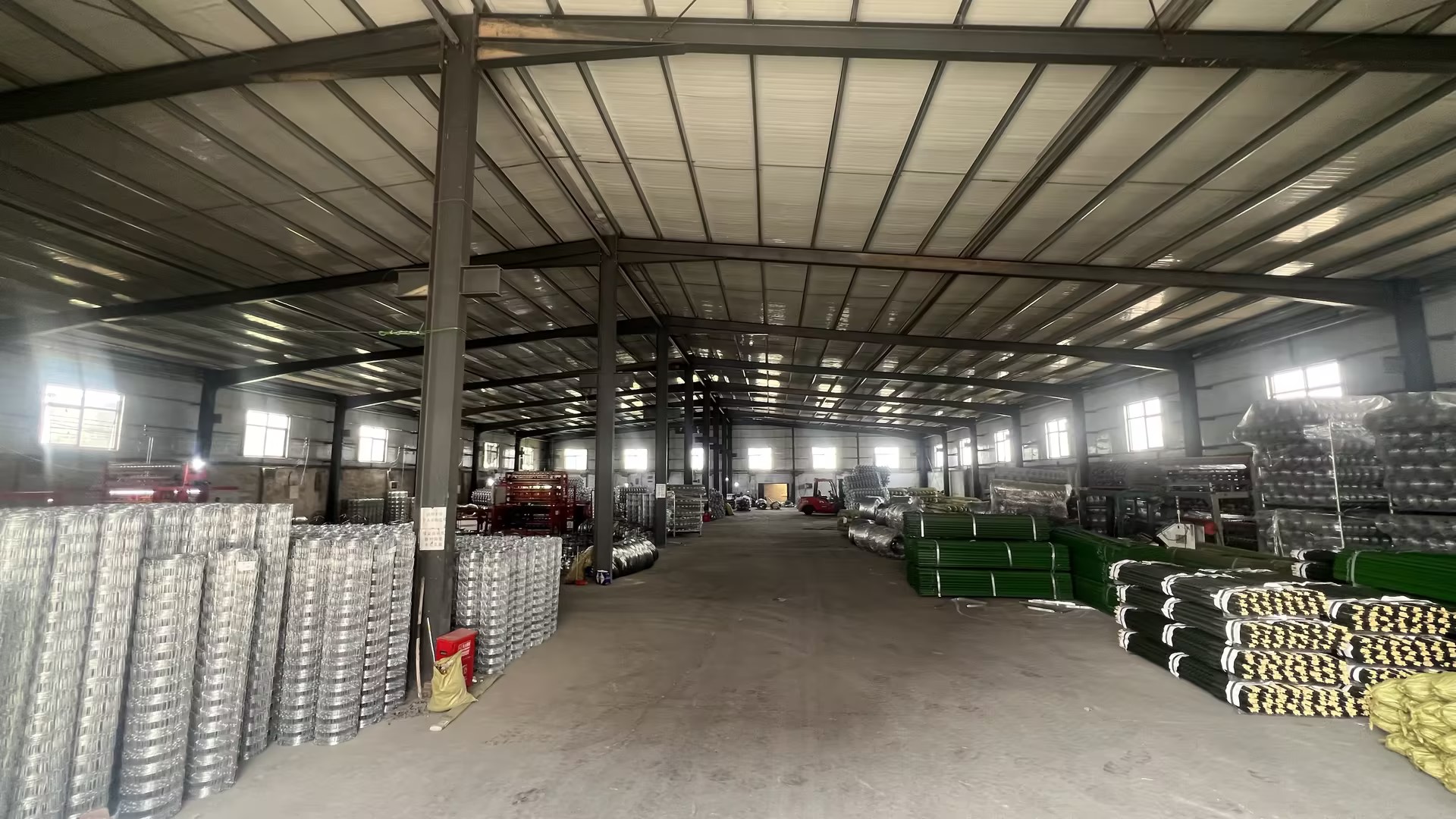
Buying fence directly from a Chinese factory can cut your landed cost significantly versus buying through a local distributor — but only if you understand how the trade works. Here is a plain-English walk-through for first-time importers, from minimum order to the container leaving the port.
At a glance
- MOQ: usually one 20-foot container; mixed trial containers are common.
- Payment: 30% T/T deposit + 70% before shipment for first orders; L/C accepted for larger orders.
- Lead time: about 20 days production after deposit, plus ocean transit.
- Shipping: FOB Tianjin is standard; CIF is an alternative. Confirm the Incoterm before comparing quotes.
- Verification: ask for a live video walk-through, written specs, and a physical sample before paying a deposit.
Minimum order quantity (MOQ)
Most wire-fence factories sell by the container. A typical MOQ is one 20-foot container (1×20GP), with larger orders shipping in 40-foot high-cube (1×40HQ). Trial orders can usually be discussed — a single mixed container is a common way to test a new supplier before committing to regular volume.
Samples
Before committing, ask for fence, wire and post samples with an English spec card. Freight on samples is usually collect or deducted from your first order. Samples let you verify wire diameter, zinc coating and knot quality firsthand — far more reliable than a photo or a spec sheet alone.
Payment terms
The industry standard for first orders is a 30% T/T deposit with 70% paid before shipment. Letters of credit (L/C) are commonly accepted for larger orders. One rule worth keeping: never pay 100% upfront to an unverified supplier — staged payment protects both sides.
Lead time
Expect around 20 days of production after your deposit clears, depending on quantity and specifications, plus ocean transit time to your port. Build both into your planning — the production clock only starts once the deposit is received and specs are confirmed.
Packing and shipping
Fence should ship on ISPM15-treated pallets — required for timber packaging entering most international markets — wrapped in plastic film, usually FOB Tianjin. A good factory shares loading photos of every container so you know exactly what shipped before it leaves.
Incoterms: what FOB actually covers
Most fence ships FOB (Free On Board) a Chinese port such as Tianjin. Under FOB, the factory price covers getting the goods loaded onto the vessel; from there, ocean freight, insurance, destination charges and duty are yours. Some buyers prefer CIF (Cost, Insurance and Freight), where the supplier arranges freight to your port. Neither is automatically cheaper — FOB gives you control of the freight, CIF gives you convenience. Agree the Incoterm in writing before you compare quotes, or you are comparing different things.
The documents you'll receive
For a normal container shipment you should expect a commercial invoice, a packing list, the bill of lading, and — where a trade agreement applies — a certificate of origin. Ask up front which documents the supplier provides; missing paperwork is a common cause of delays and extra charges at the destination port.
Don't forget the landed cost
The factory price is only part of what you pay. Budget for ocean freight, destination port charges, customs duty and last-mile delivery on top of the FOB price. Ask your supplier for the FOB price and let your freight forwarder estimate the rest — a "cheap" FOB quote can land dearer than a higher one once freight and duty are added.
Red flags to watch for
A few signals should make you slow down before paying a deposit: a supplier who will not show the production line on video; a price far below everyone else (often thin coating or under-gauge wire); reluctance to put the specification or standard in writing; and pressure to pay 100% up front or into an unrelated personal account. None of these is automatically fatal, but each deserves a clear answer before you commit.
How to verify a real factory
The biggest first-order risk is mistaking a trading company for a manufacturer. Three checks separate the two:
- Ask for a live video walk-through or an in-person factory audit. A real factory will show you the wire-drawing, weaving and galvanising lines on request.
- Confirm zinc coating and tensile specs in writing. See our guide to zinc coating for what to ask for.
- Confirm they can supply to your local standard in writing — for example your local specifications, on request.
We are a real factory, not a trading company — we control wire drawing, weaving, hot-dip galvanising and export packing in-house, and welcome audits and live video walk-throughs at any time.
Still choosing the product itself? Start with hinge joint vs ring lock for field fence, or browse the full field fence, chain link and Y post specifications.
Ready to price a container?
Send your specs and destination port and we'll calculate a tailored landed estimate within 24 hours.


